
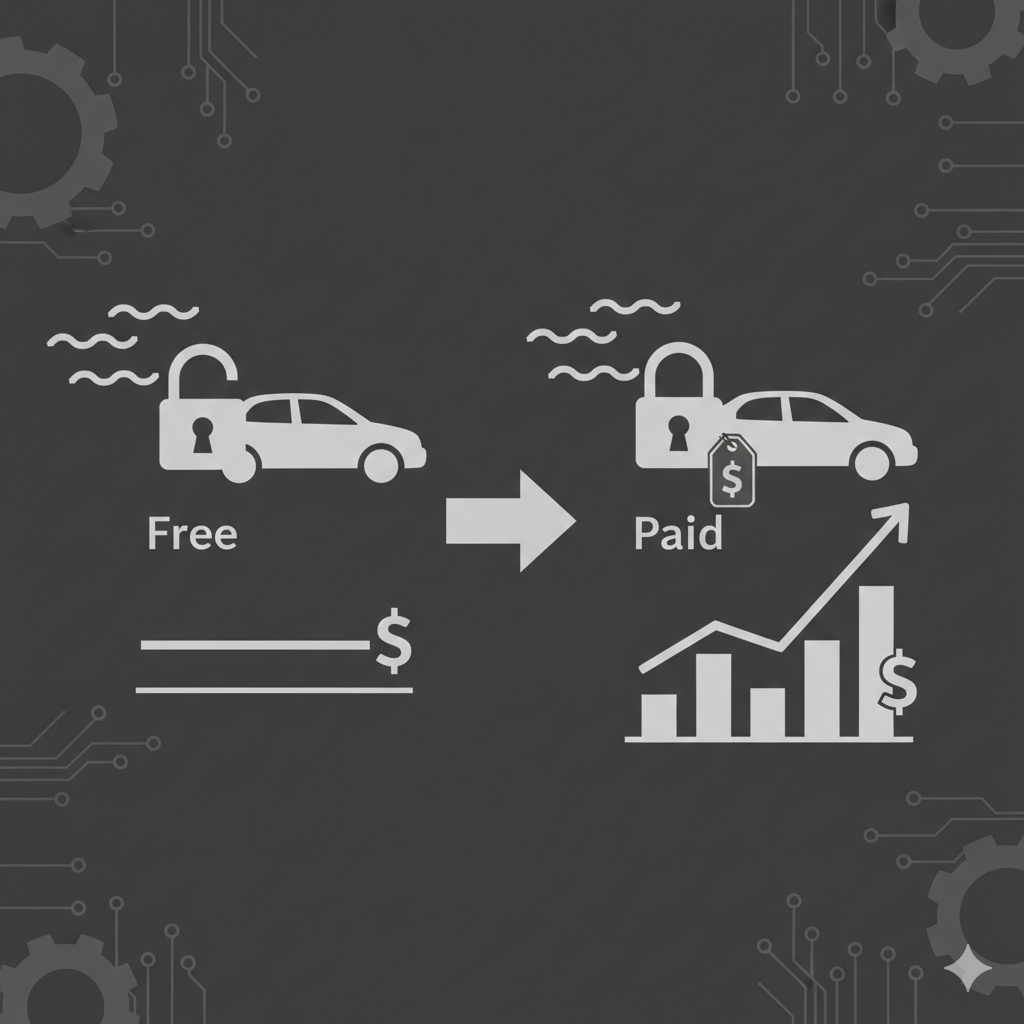
By 2026, the automotive industry has fully embraced the digital age, transforming vehicles into sophisticated, connected devices. Electric vehicles (EVs) are now a dominant force in the market, equipped with advanced driving assistance systems (ADAS) that offer unprecedented safety and convenience. A pivotal technology enabling this evolution is Over-the-Air (OTA) updates, which allow manufacturers to enhance vehicle software remotely. While initially celebrated for delivering bug fixes and improvements for free, the landscape of OTA updates is rapidly changing. What was once a complimentary enhancement is increasingly becoming a source of recurring revenue for automakers, introducing new, often hidden, costs for the modern car owner.
The Promise of OTA Updates
OTA updates revolutionized how vehicles evolve post-purchase. Their benefits are undeniable:
- Convenience: Owners no longer need to visit a dealership for software upgrades, saving time and hassle.
- Safety & Security: Manufacturers can quickly deploy critical security patches and bug fixes to address vulnerabilities or rectify performance issues.
- Feature Enhancement: Vehicles can gain new functionalities, improved performance (especially for EVs), or updated infotainment interfaces without physical modifications.
- Cost-Efficiency for Manufacturers: OTA reduces warranty claims, recall costs, and dealership service burdens.
This capability has fostered a perception of continuous improvement and added value, making OTA-enabled vehicles highly desirable by 2026.
The Shift to Monetized Updates
As the automotive industry pivots towards a "Car-as-a-Service" (CaaS) model, the monetization of OTA updates has become a strategic imperative. While essential safety and regulatory updates will likely remain free, anything that enhances comfort, performance, or convenience is now a prime candidate for a subscription fee or a one-time unlock payment. This allows automakers to generate ongoing revenue streams long after the initial sale, directly impacting the total cost of ownership (TCO) for consumers.
“In 2026, the lines between included features and premium upgrades are blurred. An OTA update might offer convenience, but it also often presents a new bill.”
Common Paid OTA Features by 2026
Owners can anticipate paying for a variety of features that are delivered or enhanced via OTA:
- Performance Boosts (EVs): Temporary or permanent increases in horsepower, torque, or acceleration. For example, a sports mode unlock could cost $50 - $100 per month or a one-time fee of $1,000 - $2,500.
- Advanced ADAS Functionality: While basic ADAS features like lane-keeping assist are standard, advanced functionalities such as automated lane change, advanced parking assist, or extended hands-free driving capabilities often require a subscription, perhaps $30 - $70 monthly.
- Comfort & Convenience Features: Heated seats, heated steering wheels, adaptive suspension modes, or upgraded climate control systems can be software-locked and offered for a monthly fee (e.g., $10 - $20 for heated seats during winter months).
- Infotainment & Connectivity Upgrades: Premium navigation with real-time traffic, augmented reality features, in-car Wi-Fi hotspots, advanced voice assistants, and app integrations typically come with monthly or annual subscriptions (e.g., $15 - $30 monthly).
- Extended Software Warranty/Security: Beyond the initial vehicle warranty, automakers might offer subscription plans for ongoing cybersecurity updates and proactive vulnerability monitoring, ensuring the vehicle's digital defenses remain robust (e.g., $100 - $250 annually).
The Financial Implications for Owners
These evolving pricing models introduce several financial considerations:
- Cumulative Costs: Subscribing to multiple features can quickly add up. An owner might easily spend hundreds of dollars annually on features that are already physically present in their vehicle.
- Resale Value Impact: A used car with many dormant, but unlockable, features might be less attractive or command a lower price than one with active features. The new owner might then face the same recurring costs.
- Feature Dependency: Over time, drivers may become reliant on certain features, making the ongoing subscription feel less like an optional upgrade and more like a necessary expense.
Hypothetical Annual Costs of Paid OTA Features (2026)
Let's consider an EV owner in 2026 who opts for a few common paid OTA features:
| Paid OTA Feature | Monthly Cost (Est.) | Annual Cost (Est.) |
|---|---|---|
| EV Performance Boost (Seasonal) | $75 (for 6 months) | $450 |
| Advanced ADAS Package | $45 | $540 |
| Heated Steering Wheel (Winter) | $15 (for 4 months) | $60 |
| Premium Navigation & Traffic | $20 | $240 |
| Total Estimated Annual Cost | $1,290 | |
Note: These figures are illustrative for 2026 and can vary by manufacturer and region. Some features might be offered as one-time purchases instead of subscriptions.
Navigating the New Landscape
To avoid unexpected expenses, prospective and current owners should:
- Read the Fine Print: Understand exactly what is included with the purchase price and what features are subscription-based.
- Budget Accordingly: Factor in potential subscription costs when calculating the vehicle's TCO.
- Prioritize Needs: Decide which features are truly essential versus those that are nice-to-have.
- Check for Bundles: Automakers may offer bundles that reduce the per-feature cost.
Conclusion
By 2026, Over-the-Air updates remain a cornerstone of modern vehicle technology, delivering continuous improvements and new functionalities. However, the shift from complimentary enhancements to monetized subscriptions fundamentally alters the economic equation for vehicle ownership. As features that were once expected to be standard become paywalled, understanding these evolving costs is paramount for a realistic assessment of a vehicle's total cost of ownership. To gain a comprehensive financial picture, including these evolving subscription expenses, always utilize a "Total Cost of Ownership" (TCO) calculator.