
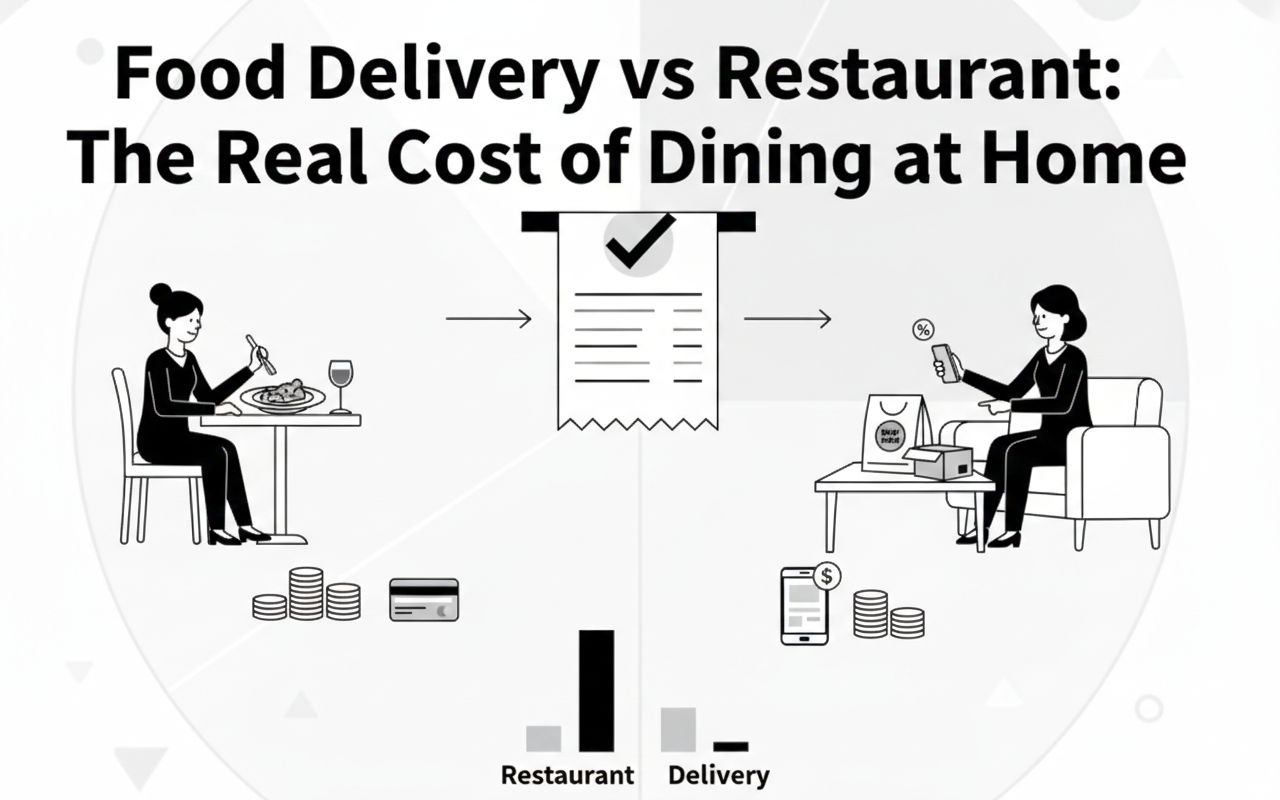
In the technologically advanced world of 2026, convenience reigns supreme. Our lives are increasingly shaped by innovations like electric vehicles (EVs) with their sophisticated advanced driving assistance systems (ADAS), and a myriad of digital subscriptions that simplify everything from entertainment to vehicle features. This pursuit of convenience extends vividly to our dining habits. The choice between having a restaurant meal delivered to your doorstep or enjoying it in the establishment itself seems straightforward, but the "real cost" often holds surprises. What might appear cheaper at first glance, food delivery, often accumulates hidden fees that can quickly rival or even surpass the expense of dining out. Understanding this true financial impact is crucial for making informed decisions.
The Allure of Convenience vs. Experience
Both food delivery and dining in offer distinct value propositions:
- Food Delivery: Appeals to those seeking comfort, time-saving, and ease. It's perfect for a cozy night in, busy work schedules, or when bad weather discourages going out. The ability to quickly order gourmet meals via intuitive apps, often integrated with personal assistants or even in-car infotainment systems, makes it incredibly tempting.
- Dining Out: Offers an experience beyond just the food. It's about the ambiance, the attentive service, the social interaction, and a break from routine. For many, it's a form of entertainment and a chance to engage with friends and family in a dedicated setting.
Deconstructing Food Delivery Costs (2026)
When you order food delivery, the price you see on the menu is rarely the final amount. Several additional charges contribute to the total:
- Menu Price Markup: Restaurants often increase menu prices on delivery platforms to offset the commissions charged by the platforms (which can be 15-30% of the order value).
- Delivery Fee: This can be a flat fee (e.g., $2-$7) or variable based on distance and demand. Some platforms offer subscriptions (e.g., "DashPass" or "Uber One") for around $10-$15 monthly that waive delivery fees for eligible orders, but the subscription itself is an added cost.
- Service Fee: Typically a percentage of the food subtotal (e.g., 5-15%), this fee often goes directly to the platform, not the restaurant or driver.
- Small Order Fee: If your order doesn't meet a minimum threshold, you might incur an extra charge (e.g., $1-$3).
- Driver Tip: An expected gratuity for the delivery driver, usually 15-20% of the subtotal (food + drinks).
- Sales Tax: Applied to the food and sometimes the delivery/service fees, depending on local regulations.
“By 2026, the convenience of food delivery is often masked by a labyrinth of fees. What appears to be a simple transaction can quickly inflate the bill by 30-50%.”
Analyzing Dining Out Expenses (2026)
Dining in a restaurant also involves more than just the menu price, but the cost structure is generally more transparent:
- Menu Prices: These are the standard prices set by the restaurant, without the delivery platform markups.
- Sales Tax: Applied to the food and drink subtotal.
- Gratuity/Tip: Typically 15-20% of the pre-tax bill for good service. For larger groups, an automatic gratuity (often 18-20%) may apply.
- Drinks: Alcoholic beverages can significantly increase the bill, and non-drinkers might find themselves subsidizing others if the bill is split evenly. This is a common point of contention.
- Transportation:
- Fuel: For gasoline cars, this is a direct cost. For EV owners, the cost of charging (if not home-charged) is a factor, though often less than gasoline.
- Parking: In urban areas, parking fees can add $5-$25 to the overall cost.
A Head-to-Head Cost Comparison: Hypothetical Dinner for Two (2026)
Let's compare the costs for two people ordering a shared appetizer, two main courses, and two soft drinks (non-alcoholic) with a food subtotal of $70, assuming an 8% sales tax and 18% tip/gratuity, and a standard delivery fee of $4.50 with a 10% service fee.
| Cost Factor | Food Delivery | Dining at Restaurant |
|---|---|---|
| Food Subtotal (Estimated) | $77.00 (10% markup) | $70.00 |
| Delivery Fee | $4.50 | $0.00 |
| Service Fee (10% on $77) | $7.70 | $0.00 |
| Sales Tax (8% on applicable total) | $7.14 (on $77 + $4.50 + $7.70) | $5.60 (on $70) |
| Driver Tip (18% on $77) | $13.86 | $0.00 |
| Restaurant Tip (18% on $70) | $0.00 | $12.60 |
| Parking/Transportation (Estimated) | $0.00 | $10.00 |
| Total Estimated Cost | $110.20 | $98.20 |
Note: These figures are illustrative for 2026 and can vary significantly based on specific restaurant pricing, delivery platform fees, tip percentages, and local transportation costs. Using a delivery subscription would reduce delivery fees but add a monthly subscription cost.
Beyond the Dollar Signs: Intangible Value
While the restaurant might appear cheaper in the above example, the intangible benefits are crucial:
- Delivery: Offers unparalleled convenience, saves time and effort on dressing up and traveling, and allows dining in a comfortable, private setting. No cleanup, besides disposing of packaging.
- Dining In: Provides a complete sensory experience – the aroma, presentation, ambiance, and social interaction. It's often seen as a treat or a special occasion, offering a break from domestic life.
Conclusion
The choice between food delivery and dining in extends beyond a simple comparison of menu prices. In 2026, a myriad of fees, markups, and indirect costs can significantly alter the final bill for delivered meals, often making them more expensive than their restaurant counterparts, even when factoring in transportation and parking. While the convenience of delivery is undeniable, understanding all the components of the "Total Cost of Ownership" for your dining choice is essential for smart financial planning. Just as you would calculate the TCO for an EV, including its ADAS and subscription features, applying similar diligence to your meal choices can save you money and ensure your culinary experiences are truly enjoyable and stress-free.