
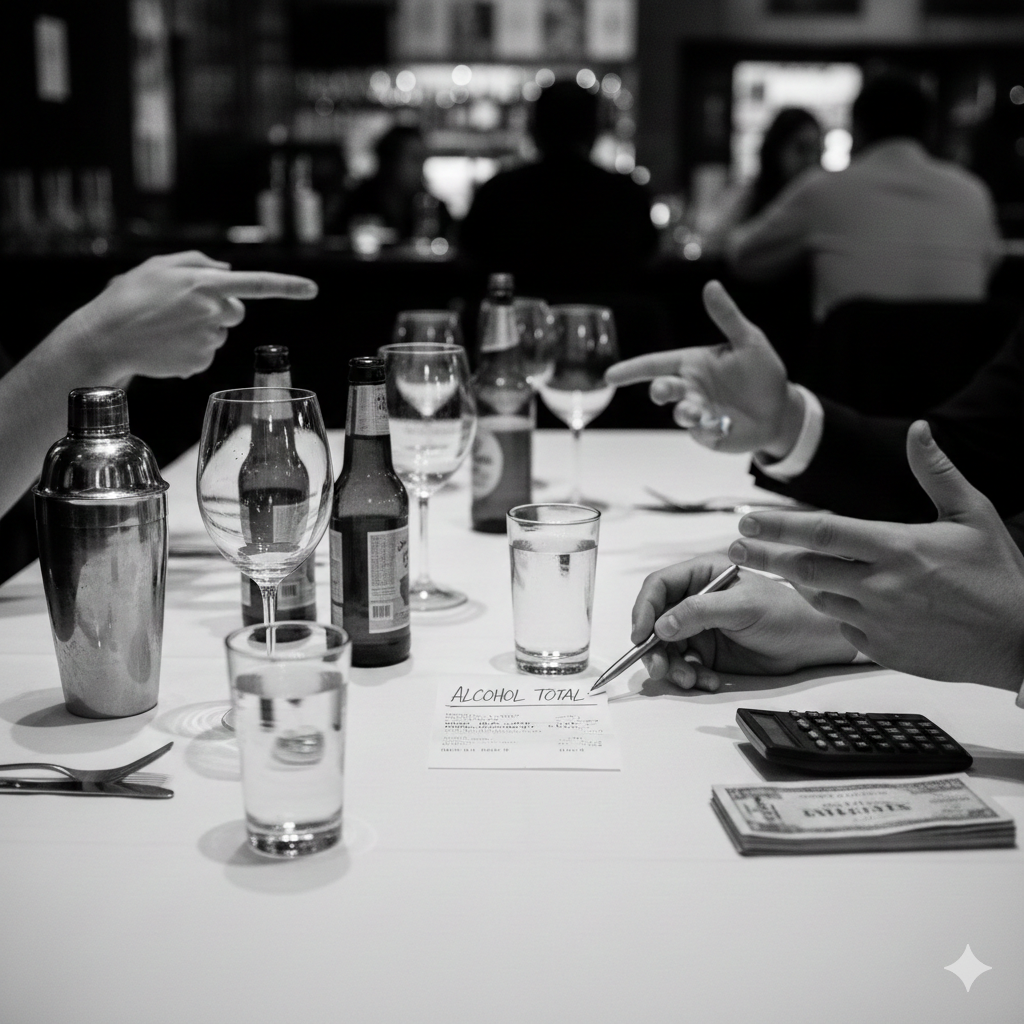
Dining out has always been a cornerstone of social interaction, and in 2026, this remains true, even as our lives become increasingly intertwined with electric vehicles (EVs), advanced driving assistance systems (ADAS), and a plethora of digital subscriptions. Yet, one age-old social dilemma persists: how to fairly split a restaurant bill, particularly when some members of the party indulge in alcoholic beverages while others do not. This seemingly simple act can often lead to awkwardness, resentment, or a feeling of being financially exploited. Understanding the nuances and adopting clear strategies is essential for maintaining harmony and ensuring everyone enjoys the meal without a post-check headache.
The Persistent Problem of Alcohol on the Bill
Alcohol is frequently the most contentious item when splitting a restaurant bill for several reasons:
- Disproportionate Cost: Alcoholic beverages, especially cocktails or fine wines, often carry a significantly higher markup than food items or non-alcoholic drinks. A single cocktail can cost more than a modest appetizer.
- Variable Consumption: Some individuals might enjoy multiple drinks, while others have just one, or none at all. An even split of the total bill unfairly burdens those who consumed less or abstained entirely.
- Social Pressure: There can be unspoken pressure to agree to an even split, even if it feels unjust, to avoid appearing petty or ungenerous.
- Dietary/Health Choices: Many people choose not to drink for health, religious, personal, or designated driver reasons. Asking them to subsidize others' alcohol consumption is fundamentally unfair.
A recent survey in 2026 indicates that over 60% of non-drinkers feel uncomfortable or frustrated when expected to contribute to the alcohol portion of a shared bill.
Traditional Splitting Methods and Their Fairness
Let's examine how common bill-splitting approaches fare when alcohol is involved:
- 1. Splitting Evenly (The "Easy" Way):
- Pros: Quick and requires no detailed calculation.
- Cons: Highly unfair when alcohol is purchased. Non-drinkers effectively pay for others' drinks. Those who drank more pay less than they consumed.
- Verdict: Not recommended for groups with significant alcohol consumption disparities.
- 2. Paying for What You Had (Itemized Split):
- Pros: The most equitable method. Each person pays for their specific food and drinks, plus their proportional share of shared items, tax, and tip.
- Cons: Can be time-consuming, especially with large groups or complex orders. Requires a cooperative restaurant staff or a robust bill-splitting app.
- Verdict: Highly recommended for fairness, especially when alcohol is present.
- 3. Separating Alcohol (The "Drinkers Pay for Drinks" Way):
- Pros: A fair compromise. Drinkers collectively cover the alcohol bill, and the remaining food/shared items/tax/tip are split among everyone.
- Cons: Still requires some calculation to separate the alcohol total and then redistribute the rest.
- Verdict: Recommended as a practical and fair solution.
“By 2026, the social contract of dining out increasingly demands transparency and fairness. Expecting non-drinkers to subsidize alcohol is a rapidly fading norm.”
Leveraging Technology in 2026
The digital tools available in 2026 make itemized splitting significantly easier:
- P2P Payment Apps: Many popular apps like Venmo, Zelle, and PayPal now feature advanced bill-splitting functionalities. You can input the total bill, then assign specific items to individuals. These apps automatically calculate tax and tip proportionally.
- Dedicated Bill-Splitting Apps: Apps like Splitwise or Tab let users add items as they order, track who owes whom, and then settle up effortlessly at the end.
- Restaurant POS Systems: Many modern restaurant Point-of-Sale (POS) systems are capable of splitting checks by item or even by individual diners from the start, alleviating the burden on guests.
Quantifying the Impact: A Hypothetical Scenario (2026)
Let’s imagine a group of 5 people dining out. The total bill for food is $150 and for alcohol is $100. There are 2 drinkers and 3 non-drinkers. Tax is 8%, tip is 18%.
| Cost Category | Total Amount | Drinkers' Share | Non-Drinkers' Share |
|---|---|---|---|
| Food Subtotal | $150.00 | $60.00 (2/5) | $90.00 (3/5) |
| Alcohol Subtotal | $100.00 | $100.00 (all to drinkers) | $0.00 |
| Subtotal before Tax | $250.00 | $160.00 | $90.00 |
| Tax (8%) | $20.00 | $12.80 | $7.20 |
| Tip (18% on $250) | $45.00 | $28.80 | $16.20 |
| Total Per Drinker | $201.60 / 2 = $100.80 | N/A | |
| Total Per Non-Drinker | N/A | $113.40 / 3 = $37.80 | |
Comparison:
- Even Split: Each person pays $63.00 ($315 / 5).
- Drinkers: Save $37.80 each.
- Non-Drinkers: Overpay $25.20 each.
- Fair Split (as above): Drinkers pay $100.80 each, Non-Drinkers pay $37.80 each.
Best Practices for a Smooth Experience
- Communicate Early: Before ordering, a quick chat about how the bill will be split can prevent issues. "Are we doing individual checks, or should we factor out drinks?"
- Offer to Itemize: Take the initiative to list who had what, especially for shared items.
- Be Proactive with Apps: Suggest using a bill-splitting app from the start.
- Be Flexible for Small Differences: If the difference is only a couple of dollars, sometimes it's best to let it go for the sake of friendship, but this shouldn't be a consistent expectation.
Conclusion
The etiquette of bill splitting, particularly concerning alcohol, demands more thoughtful consideration in 2026. With the transparency offered by modern payment apps and the growing awareness of financial fairness, expecting non-drinkers to subsidize alcoholic beverages is increasingly outdated. By communicating openly, utilizing available technology, and adhering to fair principles, dining out can remain a truly enjoyable experience for everyone. Just as a "Total Cost of Ownership" (TCO) calculator helps you understand the full financial impact of a complex purchase like an EV with its ADAS and subscription features, applying similar analytical thinking to your social expenses ensures long-term financial harmony and strong friendships.